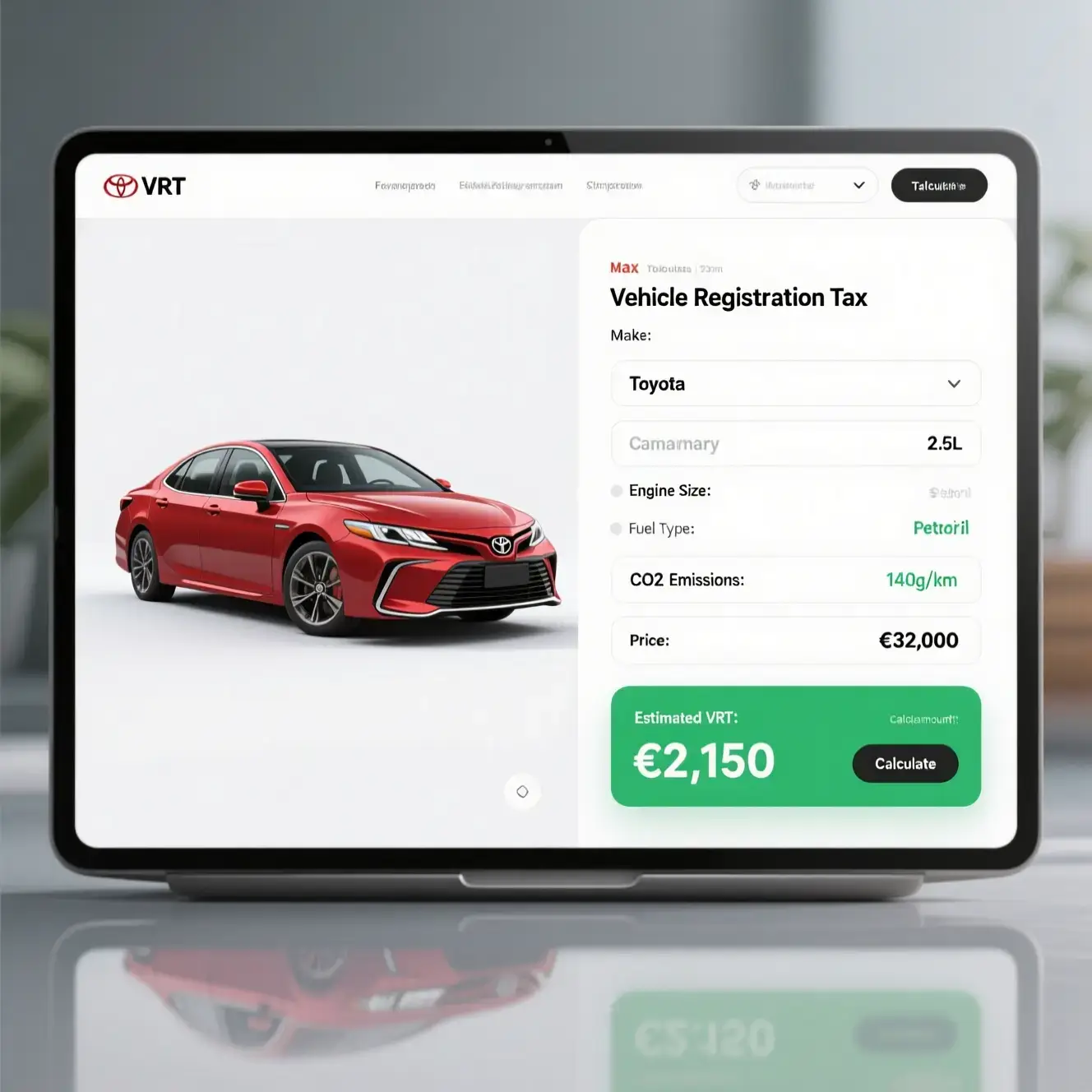
Buying or importing a car in Ireland? Then you've probably come across the term VRT—and maybe even felt a little overwhelmed by it.
VRT (Vehicle Registration Tax) isn't just a random fee. It's a big part of the cost when you bring a vehicle into the country, and it affects everything from what you'll pay upfront to what kind of car you might choose.
In this guide, we'll break down what VRT is, why it exists, and how it's calculated—without the confusing jargon.
What is VRT?
Put simply, Vehicle Registration Tax (VRT) is a tax you must pay when a vehicle is first registered in Ireland.
According to Revenue.ie, VRT applies whether you're importing a used car from abroad or registering a brand-new one here.
So, if the car hasn't been officially registered in Ireland before, VRT comes into play.
Why Does VRT Exist?
- Revenue generation: It's a major source of income for the Irish government.
- Environmental influence: The tax is structured in a way that encourages people to choose lower-emission vehicles.
That means if you're buying a car with high CO2 emissions, expect your VRT bill to be higher.
When is VRT Charged?
VRT is due the first time a vehicle is registered in Ireland. This applies whether you're:
- Importing a car from the UK, EU, or beyond.
- A dealership registering a brand-new vehicle for sale.
In short: no VRT, no registration plates.
Who Pays VRT?
- Private individuals who bring in a car from abroad.
- Car dealers who import or register new vehicles for their customers.
If the car is entering the Irish system for the first time, someone has to cover that tax.
Key Components of VRT Calculation
Your VRT bill isn't just pulled out of thin air. It's based on a few key factors:
- Open Market Selling Price (OMSP): The Revenue's estimate of what your car would sell for in Ireland.
- CO2 emissions: Higher emissions = higher VRT.
- NOx levy: An additional charge based on nitrogen oxide emissions.
Cars also fall into different VRT categories (A, B, C, D, M), depending on their type and use.
Why is VRT Important?
- It's a legal requirement. You can't register or drive your car without paying it.
- It's a major cost. For some cars, VRT can run into thousands of euros.
- It shapes the market. Many buyers choose smaller, more efficient cars to keep their VRT bill down.
Common Misconceptions About VRT
- VRT is not motor tax. Motor tax is what you pay annually to keep your car on the road. VRT is a one-off cost at registration.
- VRT is not VAT. VAT is a sales tax. VRT is specific to registering vehicles in Ireland.
Where to Find More Information
If you want the full official breakdown, check out the Revenue.ie VRT pages.
Or, if you just want a quick estimate, try our VRT calculator to get a clear idea of what you'll owe.
Final Thoughts
VRT might seem like a headache at first, but once you understand the basics, it's a lot less intimidating.
Here's the key takeaway: if you're buying or importing a car in Ireland, factor in VRT early on—it can significantly change the total cost.
👉 Want to know what you'd pay? Use our VRT calculator today and get an accurate estimate before you commit.
Frequently Asked Questions (FAQ)
Can I get a VRT refund?
Yes, in certain situations such as when you export a car from Ireland, you may be entitled to a partial VRT refund. Check Revenue's refund guidelines for details.
What happens if I don't pay VRT?
If you don't pay VRT, your car cannot be legally registered. Driving without registration is an offence and can result in penalties or seizure of the vehicle.
How long do I have to pay VRT after importing a car?
You must book a VRT inspection with the NCTS within 7 days of the vehicle's arrival in Ireland and pay the VRT within 30 days.
Is VRT the same for electric cars?
Electric vehicles (EVs) currently benefit from VRT reliefs or exemptions up to certain values, making them cheaper to register compared to petrol or diesel cars.
Does VRT apply to motorcycles?
Yes, but motorcycles are taxed under a different VRT category with their own rates and rules.