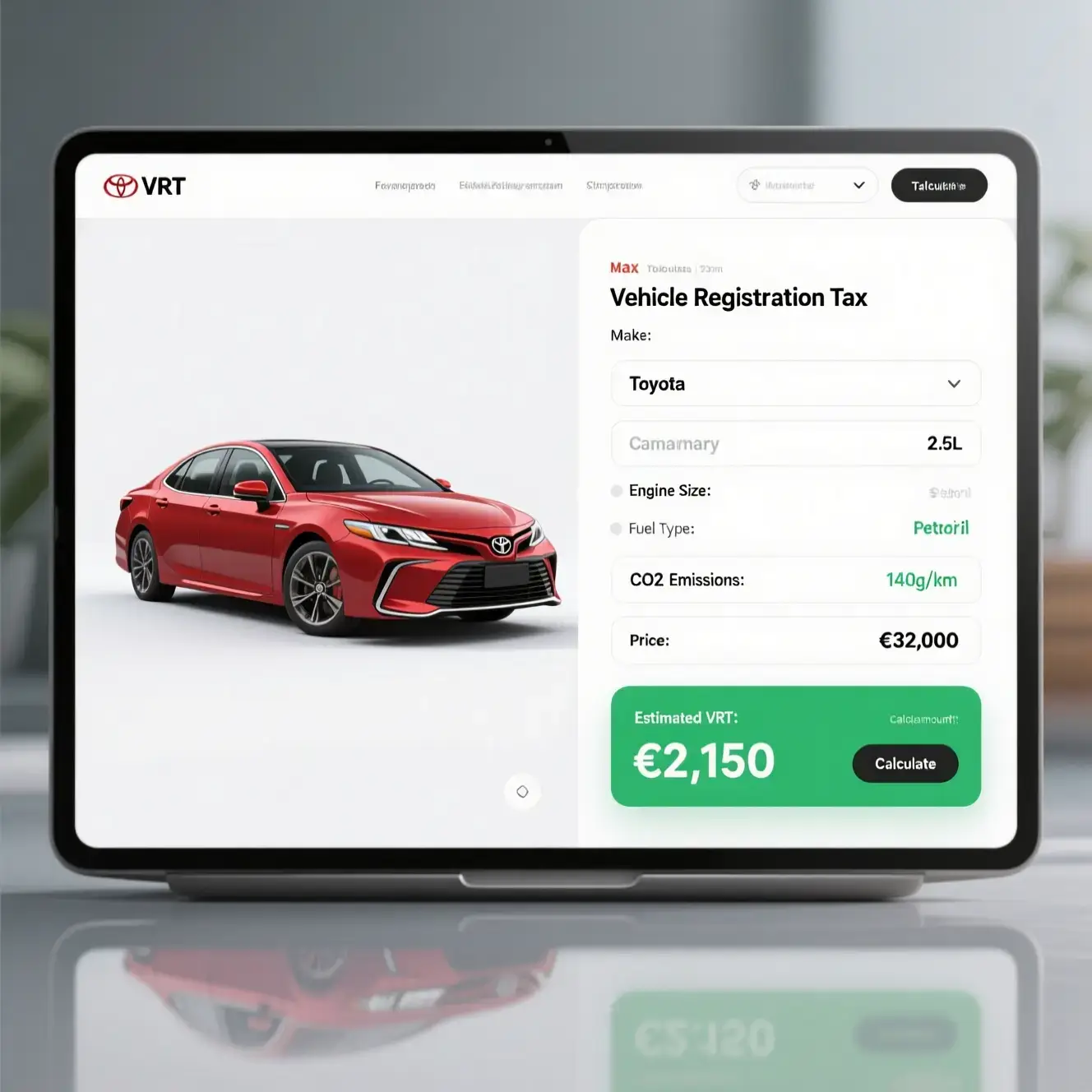
Booking your VRT appointment is the step that separates people who breeze through the import process from those who end up making multiple trips to the NCTS centre. I've seen both sides of it, and the difference almost always comes down to how prepared you are before you book that slot.
You'd think it's straightforward - find the website, pick a date, show up. And sure, for some people it is. But there's a lot of fine print that Revenue doesn't exactly shout about. The document requirements, the inspection process, the way they calculate your VRT on the day - all of it matters. Get it wrong and you're looking at delays, extra fees, or worse, having to start the whole process again.
This guide covers everything from finding the right NCTS office to what happens in the inspection bay to what you do if you disagree with their valuation. No fluff, just what you need to know.
Why the Booking Process Frustrates So Many People
Let me tell you about the most common complaint I hear. Someone imports a car from the UK, books their NCTS appointment, drives two hours to the centre, and gets turned away because they don't have the right documents. Maybe the V5C isn't in their name. Maybe they're missing the Certificate of Conformity. Maybe the inspector can't read the VIN because it's rusted over. Whatever the reason, they've wasted a day and now they have to rebook and wait another few weeks.
Another thing that catches people off guard is the 7-day booking rule. You have 7 calendar days from the date your vehicle enters Ireland to book your NCTS appointment. Not 7 working days. 7 days including weekends and bank holidays. Miss that window and Revenue can penalise you, or in extreme cases, seize the vehicle. I'm not saying that to scare you - it's rare for them to go that far for a first offence - but why risk it?
Then there's the OMSP valuation dispute. Revenue assesses your car's Open Market Selling Price when you bring it in for inspection. If you think they've overvalued it, you can challenge it. But you have to do it at the right time with the right evidence. Half the people who could save money on their VRT never bother appealing because they don't know how the process works.
So let's fix that. Here's exactly what you need to know, from the booking screen to the moment you drive away with your Irish plates.
How to Book Your VRT Appointment
Online Booking Through NCTS
The easiest way to book is through the NCTS website. You'll need your email address, the vehicle details (make, model, year, VIN), and your personal information. The system will show you available slots at centres near you. Pick one that works and confirm. You'll get a confirmation email with your appointment details. Print it or save it on your phone - you'll need to show it at the centre.
Appointments are available Monday to Friday, usually from 9am to 4pm. Some centres offer Saturday slots, but they book up fast. In my experience, morning appointments are better - the centre is quieter, the inspectors are fresh, and if there's a queue, you're at the front of it.
The booking system lets you choose from several NCTS centres across Ireland. The main ones are in Dublin (Liffey Valley and Walkinstown), Cork, Limerick, Galway, and Waterford. There are smaller centres in other locations too, depending on demand. If you're flexible on location, you can often get an earlier appointment by booking at a less busy centre.
One thing to be aware of - the online system can be glitchy. Sometimes slots that show as available aren't actually bookable. If the system gives you trouble, call the NCTS helpline instead. The phone staff are usually helpful and can find slots that the website doesn't show.
Phone and Postal Booking
If you can't book online, you can phone the NCTS booking line. Have your vehicle details ready before you call. Postal booking is also an option for people who don't have internet access, but it's slow - you're looking at weeks of back-and-forth by mail. Only use this if you really have no other option.
How Far in Advance Should You Book?
This depends on the time of year and the centre. In summer (May to August), when most people import cars, you might wait 3 to 4 weeks for an appointment at a busy centre like Dublin or Cork. In winter, you can often get a slot within a week or two.
My advice: book as soon as you know the car is coming. You can always reschedule if the sale falls through. Just be careful with the cancellation policy - if you cancel within 5 working days of the appointment, you'll be charged a fee. The current surcharge is around EUR 50 to EUR 80 depending on the centre, though you should check the latest figures on the NCTS website.
What Documents to Bring to Your Appointment
This is where most people trip up. Here's the full list of what you need, and I'll explain why each one matters.
Foreign Registration Document
For UK imports, that's the V5C logbook. The name on the V5C should match the name on the invoice and your ID. If you bought the car privately and the V5C is still in the seller's name, bring a signed and dated receipt or invoice showing the sale. Revenue wants to see a clear chain of ownership.
For Japanese imports, you'll need the export certificate and the de-registration certificate from Japan. These need to be translated into English by a certified translator. Revenue won't accept Google Translate printouts - I've seen people turned away for this.
For EU imports, you need the equivalent registration document - carte grise from France, Fahrzeugschein from Germany, carta di circolazione from Italy, and so on.
Invoice or Proof of Purchase
The invoice shows what you paid for the car. Revenue uses this as a reference point for their OMSP valuation. If you paid less than the OMSP, you'll be taxed on the OMSP. If you paid more, you might want to question why. Keep the original invoice, not just a copy.
If the invoice date is more than 30 days before the car entered Ireland, you'll need proof of shipping or storage to show when it actually arrived. This is a common gotcha - people buy a car, store it for a few weeks, and Revenue assumes the invoice date is the entry date. Keep ferry tickets, shipping receipts, port storage invoices, anything with a date on it.
Certificate of Conformity (CoC)
You need a CoC for nearly-new vehicles and for imports from outside the EU. The CoC proves the car meets EU type-approval standards. For most cars, the manufacturer or dealer can provide it. Some manufacturers charge for it - expect to pay anywhere from EUR 100 to EUR 300 for a CoC, depending on the brand.
The e-CoC (electronic version) needs to be uploaded to Revenue's system before your appointment. Your dealer can usually do this for you. If they can't, you can submit it yourself through the Revenue portal, but it takes a few days to process. Don't leave this till the night before your appointment.
Customs Clearance (MRN)
If you're importing from outside the EU (including the UK since Brexit), you need proof that customs duty and import VAT have been paid. The MRN (Movement Reference Number) from your customs declaration is the key document. Without it, Revenue won't register the car.
You can get this sorted through a customs agent or do it yourself through the Revenue online system. Expect to pay customs duty of 10% of the vehicle value (for most cars) and VAT at 23% on the total (value + duty + shipping). It adds up, so budget for it.
Photo ID and Proof of Address
Passport or driving licence for ID. A recent utility bill or bank statement for proof of address. If you've just moved back to Ireland, this can be tricky. Use a family member's address if you need to, but make sure you can actually receive post there - Revenue will send your registration certificate to this address.
Insurance Details
You don't need insurance to register the car, but you need it to drive it home. Most insurers will give you cover based on the new registration number once it's issued. Some will give you temporary cover based on the chassis or VIN before registration. Call your insurer a few days before the appointment and sort this out. The last thing you want is to get your registration number and then spend hours on the phone trying to get insured.
What Happens During the Vehicle Inspection
You arrive at the NCTS centre, check in at reception, and wait for your name to be called. The inspection itself takes about 30 to 45 minutes for a standard car. Here's what the inspector does:
Document Check
First, they go through all your documents. They check that everything matches - the name on the V5C matches the invoice, the VIN on the documents matches the VIN on the car, the CO2 figures match the CoC. Any discrepancy gets flagged, and they'll tell you what extra evidence you need.
VIN and Engine Number Verification
The inspector goes outside to the car and checks the VIN against the documents. The VIN is usually stamped on a plate under the bonnet, on the chassis rail, or inside the door pillar. If the VIN is hard to read because of rust or dirt, clean it up before the appointment. I've seen cars sent home because the inspector couldn't confirm the VIN.
They also check the engine number. For most modern cars, this is straightforward. For modified cars or older vehicles, it can take longer.
Mileage Check
The inspector records the odometer reading. If the mileage seems unusually low for the age of the car, they might ask for service history to verify it. Clocked cars get caught here all the time. If you've bought a car with genuine low mileage, bring the service history with you to prove it.
Emissions and CO2 Verification
The inspector checks the CO2 emissions against the database. This is important because your VRT rate depends on your car's CO2 band. If there's a mistake in the database, it could cost you hundreds or thousands of euros extra. For diesel cars, the NOx emissions are also checked, which affects the NOx levy.
If you think the CO2 figure on Revenue's system is wrong, bring official documentation from the manufacturer. I know someone who imported a 2022 BMW 3 Series and Revenue had it listed at a higher CO2 figure than the actual car. A letter from BMW Ireland sorted it out and saved them about EUR 1,200.
General Condition Assessment
This isn't an NCT test. They're not checking your brakes or tyres. But they do look for obvious damage or modifications that could affect the car's value. Heavily modified cars, accident-damaged cars, or cars that lookåƒæ˜¯ they've been poorly repaired can be flagged for a more detailed valuation review.
How VRT Payment Works at the Appointment
Once the inspection is done and the inspector confirms everything is in order, you move to payment. You can usually pay by debit card, credit card, or bank transfer at the centre. Some centres accept cheques but don't rely on this - card is the safest option.
The amount you pay includes:
- The VRT based on your car's OMSP and CO2 band
- The NOx levy if your car is diesel (this has increased in recent years)
- Any customs duty or VAT if you haven't already paid it at import
Check the amount before you pay. If it's higher than you expected, ask to see the breakdown. Sometimes Revenue charges based on the wrong CO2 band or a higher OMSP than your car is worth. You can query it there and then, and the inspector can often correct simple mistakes on the spot.
If you disagree with the valuation but the inspector won't change it, you can pay under protest and appeal later. Get a receipt and make a note of your disagreement on the paperwork. Then follow the appeals process within 30 days.
Keep your payment receipt. You'll need it for motor tax, insurance, and proof of payment if Revenue ever audits your file.
What Happens After the Appointment
If everything went smoothly, you'll get your Vehicle Registration Certificate (VRC) and your Irish registration number on the spot. Some centres issue the VRC electronically, others give you a printed copy. Either way, you now have an Irish-registered car.
From here, you need to:
- Get Irish number plates made (any motor factors can do this, around EUR 20 to EUR 40)
- Tax the vehicle at motor.ie or your local motor tax office (cost depends on CO2 band)
- Arrange Irish insurance if you haven't already
You can't drive the car legally until all three are sorted. Don't be tempted to drive on your UK or foreign plates after registration - it's an offence and you can be fined.
Common Reasons for Failing the VRT Inspection
Let me be clear - you don't really "fail" a VRT inspection. It's not a pass/fail test like the NCT. But you can be refused registration if things aren't in order. Here are the most common reasons:
- Missing documents. The most common issue by far. Missing V5C, no CoC, no customs clearance. The solution is simple: check the document list before you go.
- VIN mismatch. The VIN on the car doesn't match the documents. This can happen if someone made a typo on the import paperwork. If it's a genuine mistake, Revenue will usually accept a corrected document.
- Unpaid customs duty or VAT. Revenue won't register the car until they see proof that customs charges are settled. Sort this before the appointment.
- Vehicle modifications. Heavily modified cars - especially engine swaps, VW transplants, or suspension changes - can trigger a more detailed review. If your car is modified, bring documentation for the modifications.
- Suspicious mileage. If the odometer reading doesn't match the service history or the car's condition, Revenue may ask for more evidence. Honest cars are fine; clocked cars get caught.
What to Do If You Disagree With the OMSP Assessment
This is the most common dispute people have with the VRT process. Revenue assesses your car's Open Market Selling Price, and sometimes they get it wrong. Here's what to do:
Request a Review
You can ask Revenue to review the OMSP within 30 days of registration. You'll need evidence to support your case - adverts for similar cars at lower prices, a written valuation from a dealer, photos of any damage or wear that reduces the value. The more evidence you have, the stronger your case.
Go to the Tax Appeals Commission
If Revenue rejects your review request, you can appeal to the Tax Appeals Commission. This is a formal process that can take 6 to 12 months. You'll need professional advice for this step. It's worth doing if the amount at stake is significant - say, EUR 2,000 or more.
Get a Pre-Appraisal Before You Go
Some people get an independent valuation before their appointment so they know what the car is worth in the Irish market. This gives you a benchmark to compare against Revenue's OMSP. If there's a big difference, you can challenge it on the day.
Different NCTS Centres - What to Expect
Not all NCTS centres are the same. I've heard from people who've used different ones and the experience varies quite a bit. Dublin's Liffey Valley centre is the busiest - they process more cars than anyone else, which means longer wait times but also more experienced staff who've seen every kind of import. Cork is similar, though slightly smaller. Galway and Limerick are quieter, and the inspectors tend to have more time to go through things carefully.
If you're importing something unusual - a classic car, a Japanese import, a modified vehicle - a quieter centre might actually work in your favour. The inspector has more time to look at the car and understand what they're dealing with. At a busy centre like Liffey Valley, they might flag it for further review just because they don't have the time to figure it out on the spot.
Parking at the centres is usually fine. Most have dedicated spaces for VRT appointments. The inspection bays are indoors, so weather isn't an issue. Just make sure you arrive with a clean car - not for cosmetic reasons, but because a dirty car can hide damage and make the VIN harder to read.
What Happens if You Miss or Need to Reschedule
Life happens. Cars break down on the way to the appointment. You get sick. The ferry is delayed. Whatever the reason, if you can't make your appointment, here's what you need to know.
Cancelling within 5 working days. If you cancel less than 5 working days before your appointment, you'll be charged a surcharge. The exact amount changes, so check the NCTS website, but expect around EUR 50 to EUR 80. You can avoid this by giving as much notice as possible.
Missing the appointment entirely. If you just don't show up, you'll be charged the surcharge and you'll need to book a new appointment. The 7-day booking clock is still ticking, so if you're already close to the deadline, you could be in trouble. Contact Revenue immediately and explain what happened.
Running late on the day. If you're going to be late, call the centre. Some of them can fit you in later in the day if there's a cancellation or a gap in the schedule. Others will reschedule you. It's always better to call than to just not show up.
Revenue cancelling your appointment. This is rare but it happens. If Revenue has to cancel (system issues, staff shortages, etc.), they'll reschedule you free of charge. They'll also extend your 7-day booking window to account for the delay. Don't rely on this happening, though - if Revenue cancels, you still need to get the car registered within the 30-day limit.
Tips From People Who've Been Through It
I asked a few people who've imported cars recently what they wish they'd known before their VRT appointment. Here's what they said:
"Bring snacks." Sounds silly, but appointments can run long and there's not always a shop nearby. One person told me they waited three hours because the inspector had to call Revenue about a CoC issue.
"Double-check the V5C." A friend imported a car where the V5C had a typo in the VIN - one digit wrong. The inspector spotted it immediately and they had to wait for the DVLA to issue a corrected document. Six weeks delay for a single digit.
"Take photos of the car before you go." If there's any damage or wear you want to use as evidence for a lower OMSP, having date-stamped photos helps.
"Book early in the week." Monday or Tuesday appointments mean if something goes wrong, you have the rest of the week to sort it out before the weekend. Friday appointments that hit problems mean waiting till Monday.
"Know your CO2 band." Check what CO2 band your car falls into before the appointment. If Revenue puts it in the wrong band, you could overpay by thousands. Our VRT calculator can help you estimate this beforehand.
Final Things to Watch Out For
A few last things that don't fit anywhere else but are worth knowing:
Rescheduling fees. If you cancel within 5 working days of your appointment, you'll be charged. The fee varies by centre but expect around EUR 50 to EUR 80. If you're going to be late, call ahead - sometimes they can fit you in later in the day without charging a cancellation fee.
Driving to the appointment. You can drive the unregistered car to the NCTS centre as long as you carry proof of your booked appointment. But don't use the car for anything else - no shopping trips, no detours. If you're stopped by the Gardai, you need to be able to prove you're driving directly to the appointment.
Vehicle seizure. In extreme cases - like if you're caught driving an unregistered vehicle or you've missed the 30-day registration deadline - Revenue can seize the car. This is rare for genuine importers, but it happens. Don't ignore the deadlines.
Getting help. If the process feels overwhelming, there are companies that specialise in VRT registration for a fee. They'll handle the paperwork, book the appointment, and even drive the car to the centre for you. It costs a few hundred euro but can save you a lot of hassle if you're importing something complex.